Meet before interpreting · Neurodiversity coaching and training
Meet before interpreting · Neurodiversity coaching and training
Neuro-affirming practice: for a truly attuned presence with neurodivergent people.
Because changing the way professionals see people transforms the way people see themselves. A neurodivergent person shouldn’t have to mask, translate themselves or constantly adapt the way they are in order to receive support. It starts with professionals who can understand different ways of functioning and meet the person before interpreting them. Change doesn’t only happen in policies or awareness campaigns. It is built in offices, classrooms and everyday exchanges, one relationship at a time. If that is the kind of professional you want to be, this program is for you.

Psychoeducators, social workers
Coaches, therapists
Teachers

Guidance counsellors,
managers in helping professions
What this program is not: it is not a screening or diagnosis training, it is not a neuropsychology certification, and it is not a coaching training. It assumes you already have a helping practice, and it transforms its relational quality. You don’t need to be neurodivergent yourself to belong here. Nor do you need to hide it if you are.
No prior knowledge of neurodiversity is needed. What is needed, however, is a real willingness to examine your own stance. You don’t leave with a checklist to apply: you leave with a changed perspective, and that requires accepting to be moved.

Perhaps you found this page on LinkedIn, through a recommendation, or simply because you support a neurodivergent person and are looking for new ways to adapt your practice. Your usual tools no longer always seem to be enough, and you want to better understand what can really make a difference.
The neuro-affirming stance offers precisely another way to understand neurodivergent realities and integrate them into your practice. It rests on clear principles that can concretely transform the way you support, intervene and create more suitable spaces.
Before going further, I invite you to discover my approach, my certifications, my ICF affiliation, as well as the professional framework that supports my practice and the CCE accreditation currently in progress.
If this approach matches your values and your view of supporting others, the Neuro-affirming practice program could be the next step in your journey. Offered in small cohorts a few times a year, it lets you deepen these principles and integrate them concretely into your practice. Check the next cohorts and choose the one that fits your schedule.
The approach
Every neurodivergent person deserves to be met before being interpreted. What looks like resistance, slowness or a lack of motivation often has a meaning. My practice is neuro-inclusive in its stance and neuro-affirming in its philosophy: I concretely adapt the support while recognizing that neurodivergence is not a deficiency to normalize, but a different way of functioning to understand and respect.
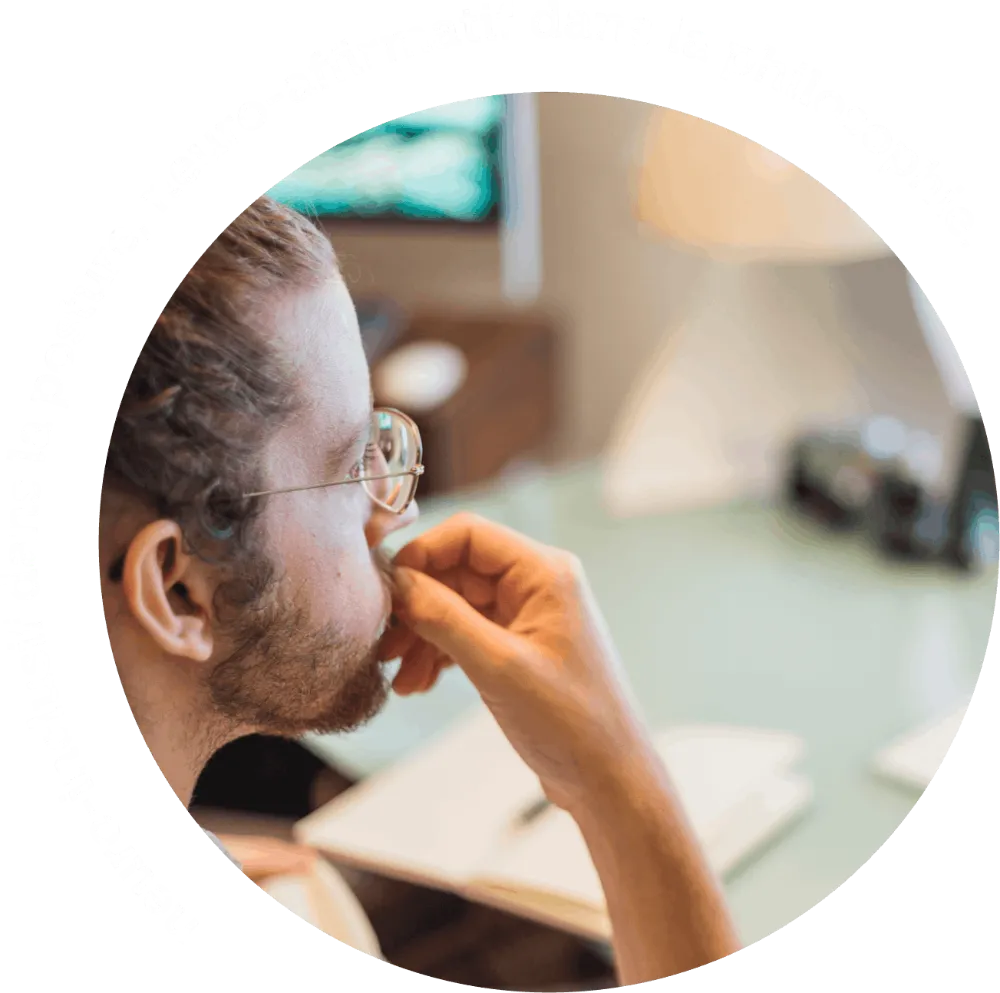
A neuro-affirming practice is an approach to support that sees neurodivergent functioning as a natural variation of human functioning rather than a deficit to correct. In practice, it seeks to understand the meaning of behaviours before interpreting them as obstacles, and it adapts the support framework to the person’s real needs rather than asking the person to adapt to the framework.
Neuro-inclusive refers to concrete adaptations in practice: pace, how questions are phrased, how transitions are handled, a clear framework. Neuro-affirming refers to how you see the person, the conviction that the way they function is legitimate in itself. You can be inclusive in your actions without being affirming in your outlook, and the person you support always feels the difference.
No. The program welcomes all helping professionals, whatever their original training. Certification is not a prerequisite, and the content assumes no knowledge of the ICF competency model.
CCE accreditation is in progress: an application has been submitted to the International Coaching Federation for both levels, and a response is expected in fall 2026. The program was built from the start to meet CCE program requirements: the content is aligned with the eight core competencies of the ICF model and the synchronous format meets the required standards. I will share the decision with registered participants as soon as it is made.
No. The program is for professionals, not for people seeking support for themselves. That said, several participants discover or recognize something about their own functioning along the way, and there is room for that.
The workshops take place live by video conference, in small groups, two hours each. Each session alternates theory, role-plays and integration time, and includes a body break. There is no homework to hand in between sessions.
To find out the schedule of upcoming cohorts, the language of delivery and the fees, write to me.
The Neuro-affirming Program is designed and delivered by Annie Lachance, a Professional Certified Coach (PCC) with the International Coaching Federation (ICF) and a member of ICF Québec. Each workshop is aligned with the eight ICF core competencies, and an application for CCE (continuing education) accreditation has been submitted to the ICF for both levels: a response is expected in fall 2026.
Annie is also listed in ADHD Girls’ registry of certified AuDHD practitioners and is a member of the Académie des naturopathes et naturothérapeutes du Canada (ACNN). These foundations inform the content on embodiment, co-regulation and the nervous system that you can bring into your own practice.


Annie Lachance

My name is Annie Lachance. Before teaching neuro-affirming practice, I lived it from both sides: more than twenty years in helping relationships and mental health, much of it in crisis intervention, and an autism and ADHD diagnosis received at 44. I know, from the inside, the cost of an intervention that interprets too quickly: resistance misread, masking reinforced, exhaustion mistaken for a lack of motivation.
A Professional Certified Coach (PCC, ICF), with a bachelor’s degree in social work specializing in mental health and founder of Les AuDAHcieuses, I share with you in this program what transformed my own practice: meeting the person before interpreting their behaviour, adjusting the framework rather than the person, and leaving with concrete reference points to apply from your very next sessions.
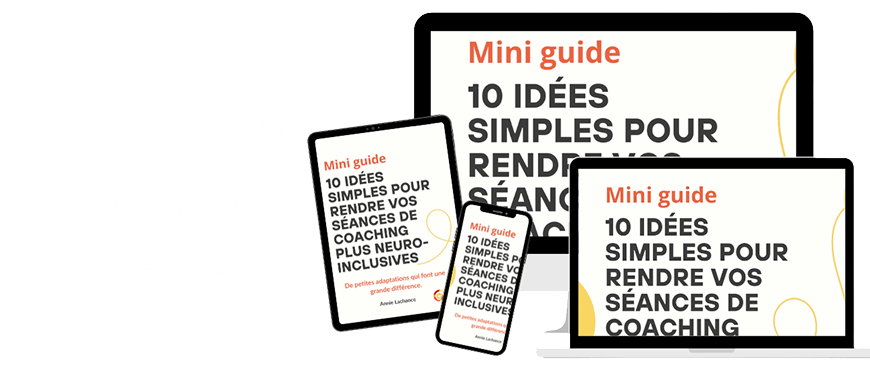
Get your free guide (in French)
10 simple ideas to make your coaching sessions more neuro-inclusive